
Mark T.'s 72-Hour ATM Skimming Scheme: The Rapid Fall of a Criminal
A Tampa Bay man paid $480 in Monero for six cloned debit cards, withdrew $4,900 in two weeks, and was identified from ATM video within 15 days.
- Written:
- Updated: October 26, 2026
- Editor: Cassandra Delacroix
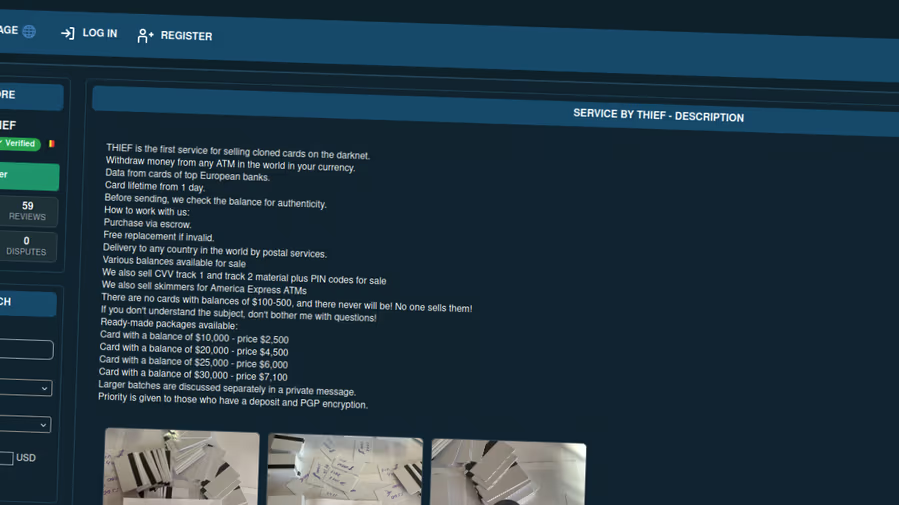
A darknet marketplace interface advertising cloned card services — the type of listing Mark T. used to buy six cards with PIN codes.
Convinced he had discovered a fast track to riches, Mark T., a 34-year-old from Tampa Bay, Florida, purchased six cloned debit cards for $480 in Monero on a darknet marketplace in 2024. Having invested $480 in cryptocurrency in November 2024, he managed to acquire six counterfeit debit cards with hacked PINs from a darknet marketplace. Stolen magnetic stripe data from real accounts was contained in these cards, a hallmark of the carding industry. After withdrawing $4,200 from three separate ATMs, his luck ran out at the fourth machine, which resulted in the end of his illegal activities.
This narrative is not a manual on purchasing cards; rather, it illustrates how a once-elusive criminal was apprehended within just 72 hours. You might wonder how ATM surveillance can be more effective than traditional detective work. A 5-year sentence in federal prison resulted from the digital evidence trail connecting the U.S. Secret Service to a crypto wallet.
If you're curious about identifying credit card skimmers or the effectiveness of skimming protection, this case reveals the consequences faced by individuals misusing stolen data.
What matters
ATM cameras record faces in 1080p — a 23-second video was enough to identify Mark through driver's license databases.
KYC on a centralized exchange linked Mark's Monero purchase to his identity, undermining the anonymity he paid for.
All four withdrawals happened within 40 miles of his home in two weeks — a pattern anti-fraud systems flagged automatically.
Physical evidence at home — blank cards, an MSR device, and $3,200 in cash — strengthened the federal case.
Mark netted $4,420 after buying the cards, then received 5 years in prison, a $22,000 fine, and 3 years of supervised release.
1. How carding works: the chain
Carding involves the illicit use and trade of stolen financial data, representing a persistent challenge in cybercrime. Mark's approach highlights a systematic process.
Data Collection: Sensitive magnetic card details (tracks 1 and 2) are collected by criminals using methods like skimmers on ATMs, phishing tactics, or accessing data breaches on the dark web.
Data Transfer: Blank plastic cards are encoded with stolen information, creating a façade of legitimacy by including names, expiration dates, and card numbers that closely replicate those of actual bank cards.
Accessing PINs: Once a PIN is captured via methods like an overlay keypad or a hidden camera at an ATM, the buyer is able to withdraw cash.
Withdrawing Cash: The buyer swiftly extracts money from an ATM before the victim can react and block the card.
Concealing Money: The cash is then converted into cryptocurrency, effectively disguising its origin.
Mark acquired the cards from an undisclosed online marketplace, opting for Monero due to its privacy advantages. The cards arrived in unmarked packaging, enhancing the confidentiality of the transaction. Keep in mind that ATMs do more than dispense cash; they also gather evidence.
If you're utilizing a credit card skimming device detector or implementing anti-skimming strategies, you're tackling physical security threats effectively. Mark failed to realize that the ATM was recording his actions.
2. The vulnerability Mark didn't account for: the camera
ATMs have evolved dramatically from basic cash machines into sophisticated surveillance devices. Why should you care? Because your actions at an ATM are being captured and stored every time you make a transaction.
Front Camera: This component takes clear images at a remarkable 1080 resolution, frequently improved with infrared technology to enhance visibility in dim conditions.
Hidden Camera: Numerous ATM variants are equipped with an additional discreet camera, positioned to capture angles that the main lens might miss, making it tough for anyone to escape recognition.
Transaction Records: Every operation you perform is logged with details such as the time, amount, card number, ATM ID, and the status of your transaction.
Location Data: The ATM knows its exact geographic location and shares this with the bank, ensuring a detailed record of transaction sites.
Network Logs: Each interaction with the bank’s systems is documented, including specifics about the connection.
Imagine this scenario: Mark approaches an ATM in a Tampa Bay suburb, and the front camera captures his face—he's not wearing any disguise. He withdraws $700, retrieves his card, and departs. This entire event is recorded in a clip lasting twenty-three seconds.
Now think about this: you might use protective sleeves against ATM skimmers, but those precautions are meaningless if your face is visible on camera. Some criminals are under the false impression that online anonymity carries over into the real world. In fact, ATMs act as a link between digital and physical crimes, where true anonymity disappears.
3. How the investigation proceeded: timeline
Reports emerged on November 1, 2024, indicating that individuals from Florida, Georgia, and North Carolina experienced unauthorized withdrawals from their bank accounts. Promptly, banks freeze the affected cards and start a fraud investigation after three individuals from North Carolina, Georgia, and Florida report unusual withdrawals from their accounts.
On Day 3, a troubling pattern emerges as the banks' fraud detection systems reveal that a series of cloned cards are being used to make withdrawals across several states in a short period. An urgent alert is prompted by this finding, escalating the matter to the investigative team of the bank.
The U.S. Secret Service (USSS) took over the case on Day 5, as they are the agency responsible for investigating financial crimes. Transaction records from all compromised ATMs are requested by an analyst from the USSS, who also starts examining the retrieved video footage.
Day 8: Reviewing the footage from the fourth ATM uncovers a clear image of a suspect. By comparing footage from a specific ATM taken on Day 8 with records from the Florida Department of Public Safety, it was confirmed that Mark T., who has no prior criminal history, was the individual identified. Analysis revealed that all the withdrawals occurred within a 40-mile radius of Mark T.'s home.
Day 12: The investigator secures a warrant to gather digital evidence, including browsing history, Internet Service Provider (ISP) records, and cryptocurrency wallet activity. The ISP analysis indicates that Mark accessed Tor exit nodes during times that align with his purchases. A court order revealed that an account on a darknet marketplace is linked to his Monero wallet.
On Day 14, at Mark's residence, law enforcement uncovered significant evidence, including $3,200 in cash, a laptop that showed visits to darknet marketplaces, a magnetic stripe read/write device, and six blank plastic cards, as part of a search warrant execution.
On Day 15, the arrest of Mark takes place. During the interrogation, he acknowledges that he bought the cards and managed to cash out four of them. He mentions that by the time he tried to use the last two cards, they had already been blocked by the bank.
This timeline highlights the rapid and effective nature of contemporary financial investigations, demonstrating how both physical and digital evidence can converge to solve cases.
4. The numbers
The following figures outline the financial activity and legal consequences in Mark's case.
Financial and Legal Overview
Completed ATM transactions: 4 A withdrawal of $4,900 took place. $480 was the cost associated with the cards. From the time of withdrawal to the arrest, there were 15 days. In federal prison, a sentence lasting 60 months (5 years) was imposed. The fine and restitution amounted to $22,000. A supervised release period of 3 years was imposed.
Mark faced a serious federal prison term of 5 years due to a net gain of $4,420 before penalties, which averages to less than $900 per year during his sentence. If you’re exploring discussions on carding or engaging in forums about cloned cards, it's crucial to consider the real risks involved and the significant losses that can occur.
5. Why crypto didn't save him
Mark's efforts to protect his identity using cryptocurrency ultimately fell short. He acquired Monero via a centralized platform, where he had to undergo the KYC process. This decision marked the beginning of his troubles.
Choosing a centralized exchange for his Monero purchase necessitated identity verification. By submitting his passport along with a selfie, the exchange successfully linked him to the transaction. While Monero transactions can be challenging to trace later on, the specific date and amount of his purchase became critical evidence.
The investigation's timeline was significant. In just two weeks, he bought Monero, conducted card transactions, received the cards, and withdrew cash from ATMs. The close timing of these actions, though circumstantial, built a compelling case against him.
Furthermore, the physical evidence obtained during the investigation was substantial. The recovered cards had magnetic strips that matched information from real victims. This connection is something that cryptocurrency cannot hide.
Additionally, video evidence provided undeniable proof. A recorded image of Mark’s face is not something that can be concealed or altered. Even if he had managed to erase his digital tracks, that video alone would have linked him directly to the crime.
If you’re exploring card cloning or skimming prevention, you probably understand the technical challenges involved. However, execution is where many falter. The KYC process serves as a link, connecting your online actions to your real-world identity. Once you cross that threshold, not even Monero can eliminate your traces.
6. What went wrong: Mark's mistakes
Mark's errors led to a transition from a potentially lucrative operation to a serious investigation by federal authorities. Here are the critical blunders he made:
ATM Locations. Four ATMs were utilized by him, all situated within a 40-mile range from where he lives. This behavior triggered alerts in fraud detection systems that monitor for unusual transaction patterns.
Identity Vulnerability. He didn't attempt to disguise himself, appearing clearly on surveillance videos. This made it easy for law enforcement to trace him using publicly available records.
Method of Acquiring Monero. By purchasing Monero through a centralized exchange, he inadvertently linked his actual identity to the cryptocurrency transactions he executed on the dark web.
Home Evidence Storage. During the search of his home, multiple incriminating items were uncovered, which included a laptop containing records of his activities, an MSR device, and blank cards. Digital traces can persist, even when attempts are made to erase them; for instance, the Tor Browser can retain evidence while system logs disclose usage trends.
Cash Seizure. During the raid, authorities found $3,200, matching the amounts withdrawn from the ATMs. Although this might appear minor, it significantly strengthened their case against him.
Withdrawal Timing. He withdrew cash over a short span of two weeks. Had he spaced these transactions out over a longer period, he could have lowered the risk of detection, although video footage would still have captured his image.
7. Lessons for security professionals
Mark's story highlights the effectiveness of security protocols rather than the cunning of criminals, illustrating just how much more effective these measures can be than many card fraudsters anticipate.
Initially, the burden of protecting against fraud rests with banks, a crucial yet often overlooked aspect of security. Techniques such as pattern analysis, location-based checks, and scoring systems function seamlessly, frequently without any human intervention. Continuous investment in advanced machine learning solutions aimed at identifying unusual activities is essential for banks.
It's vital to merge digital and physical investigative methods. Critical evidence, such as video recordings from ATMs, serves as a goldmine for investigations. However, this footage is rendered useless without the associated digital transaction logs; knowing the exact moment to capture a frame is key. The integration of these two investigative realms lays the groundwork for comprehensive inquiries.
Digital currencies that claim to be "anonymous" do not provide total privacy. When a transaction is initiated through a KYC-compliant exchange and cash is withdrawn, it connects the digital actions to the real world. Complete anonymity is unattainable while KYC regulations remain in effect.
Customer awareness represents a significant vulnerability. Many individuals fail to notice fraudulent transactions right away. Swift reporting of theft allows banks to swiftly deactivate cards, reducing potential losses from fraud. Educating customers should be a top priority for banks to effectively mitigate financial impact.
For regular users, recognizing a skimming device on a card reader is crucial. Always check for anti-skimming features while using your card, and make daily financial statement reviews a habit. The faster you catch fraud, the less harm it will cause to your wallet.
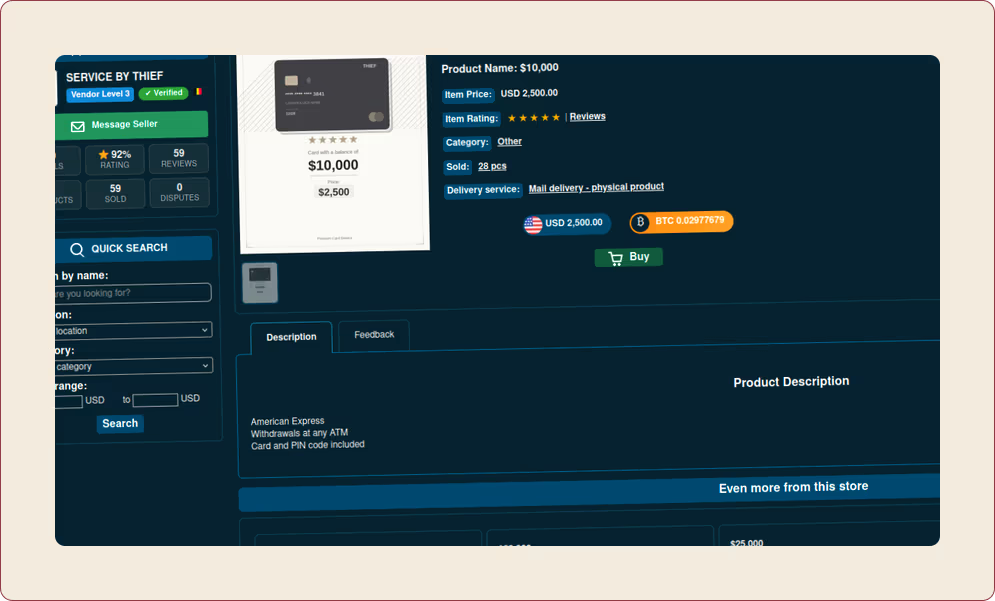
A darknet marketplace listing advertising cloned card services — the type of product Mark T. purchased for $480 in Monero.
8. The verdict
In March 2025, responsibility for his role in fraudulent activities related to access devices, as detailed in 18 U.S.C. § 1029, along with additional money laundering accusations under 18 U.S.C. § 1957, was accepted by Mark T. The U.S. District Court for the Middle District of Florida imposed a prison sentence of 60 months. Upon finishing this period, supervised release for three years will follow for Mark, who also must pay a fine of $22,000 and compensate three people impacted by his actions.
The court highlighted that Mark was not the chief architect of the fraudulent scheme; instead, he functioned merely as a purchaser, the final cog in a larger operation. This distinction carries significant weight, as those in subordinate roles often face the most severe penalties, while the higher-ups frequently escape accountability. This reality presents a considerable challenge for law enforcement agencies striving to tackle such illicit activities.
While discussions surrounding digital fraud can feel overwhelming, the truth for participants at the lower end of the chain is stark: lengthy prison sentences, hefty financial penalties, and a damaged reputation that lingers long after the digital currency has been used.
The bottom line
Mark T. visited four ATMs within a two-week period before he found himself in federal prison for 5 years. The inquiry took 15 days to complete. The crucial piece of evidence that led to the resolution of this case wasn’t due to intricate blockchain analysis; it originated from a simple 23-second video clip captured by an ATM and a Know Your Customer (KYC) check on a cryptocurrency exchange.
Are you exploring topics about card skimming on Reddit or examining images of ATM skimmers to understand the risks? Remember, these threats work both ways. While cash-dispensing ATMs can give you money, they also collect vital evidence against you. The cryptocurrency that promises anonymity requires an entry point that can reveal your identity.
Mark obtained six cards from a darknet site, spending $480 in Monero, a cryptocurrency chosen for its effectiveness in avoiding blockchain detection. That site is still operational, but the individual who made use of it is no longer at liberty.
Mark bought his cards on the website where the purchase was made — a darknet marketplace we will not name.
Elsewhere on the site

Dark web search engine reddit
Discover the best dark web search engines recommended on Reddit to access hidden .onion content safely and efficiently.
Exploring Dark Web Credit Card Sites
Discover how dark web credit card sites operate and learn to identify associated risks and threats effectively.
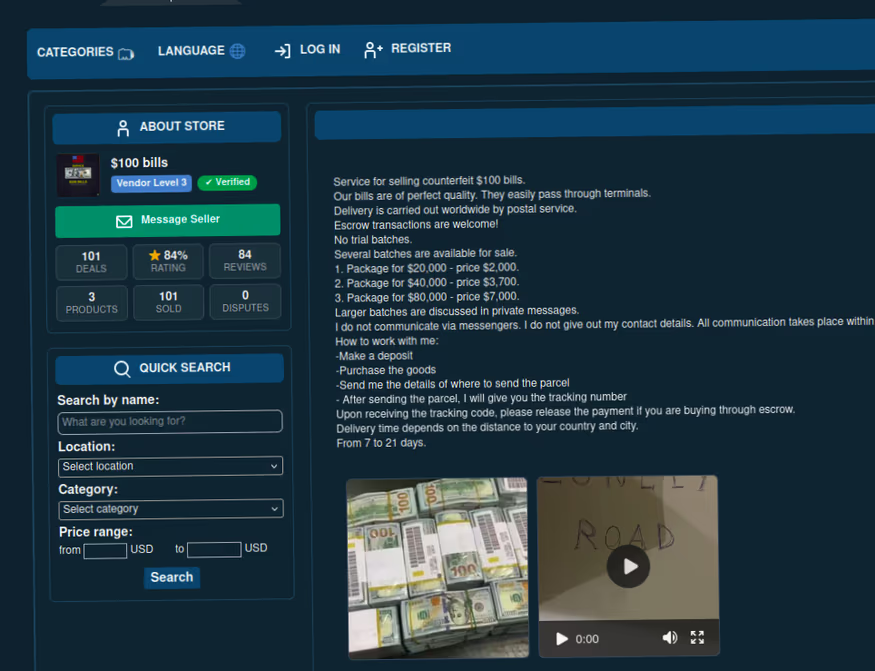
The Unexpected Downfall of Derek H.: A Counterfeit Scheme Story
A Denver man bought 40 fake $100 bills for $1,200 in crypto, deposited them at ATMs, and was arrested by the Secret Service 3 weeks later.